Teak Wood in Today’s Market: Why African Iroko Hardwood Is Gaining Ground
Teak Wood has long been associated with durability, longevity, and a certain quiet confidence in design. It is a material that has proven its worth over time, used in everything from ship decks to heirloom furniture and architectural features expected to last for decades. That reputation still holds, but what people understand as “teak wood” today is less straightforward than it once was.
The market now includes several sources, each shaped by different growth conditions and supply realities. Traditional teak from Tectona grandis remains the benchmark, while Indonesian plantation teak has become widely available due to managed forestry practices.
Alongside these, African Iroko hardwood which is often referred to as African teak is a recognised hardwood in its own right, and is used in many of the same applications as traditional teak due to its comparable durability and performance. At the same time, export controls, harvesting cycles, and material availability have begun to influence what buyers can realistically source, particularly when it comes to larger furniture formats.
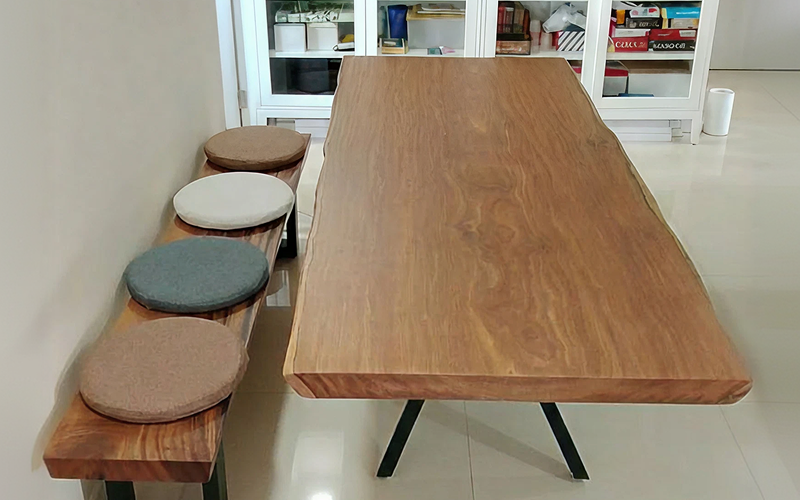
This shift becomes more evident when the focus moves beyond basic durability and onto how the material is used. Many homeowners and designers are now drawn to wide wood slab furniture, where the emphasis is on continuity and presence rather than assembly.
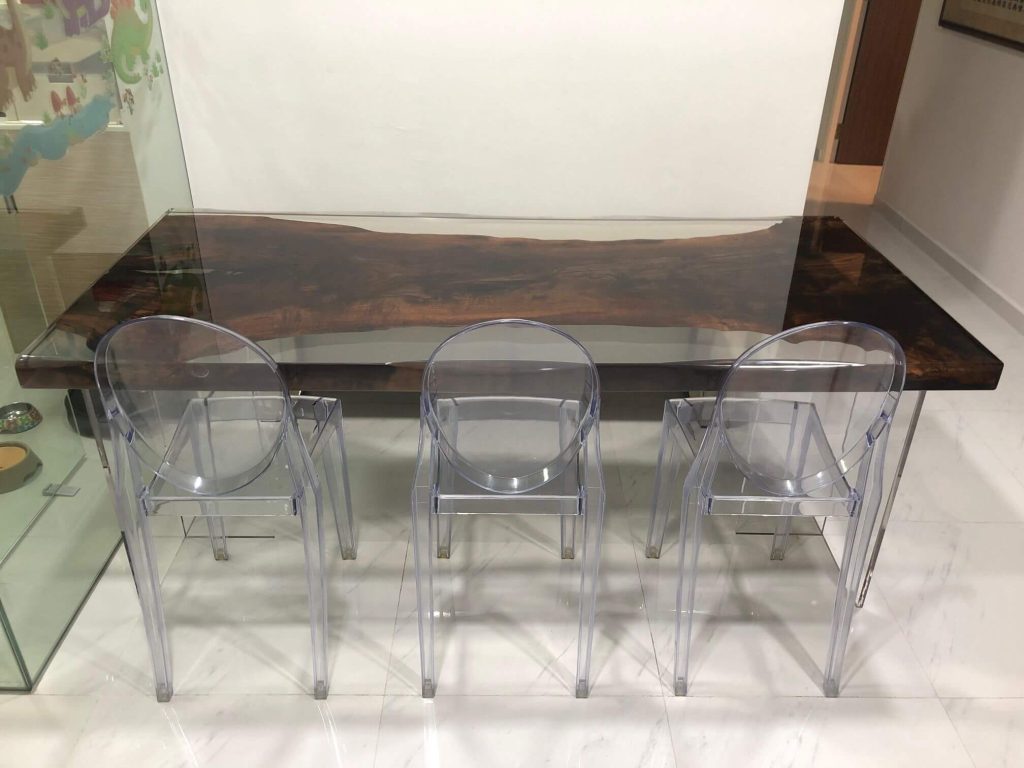
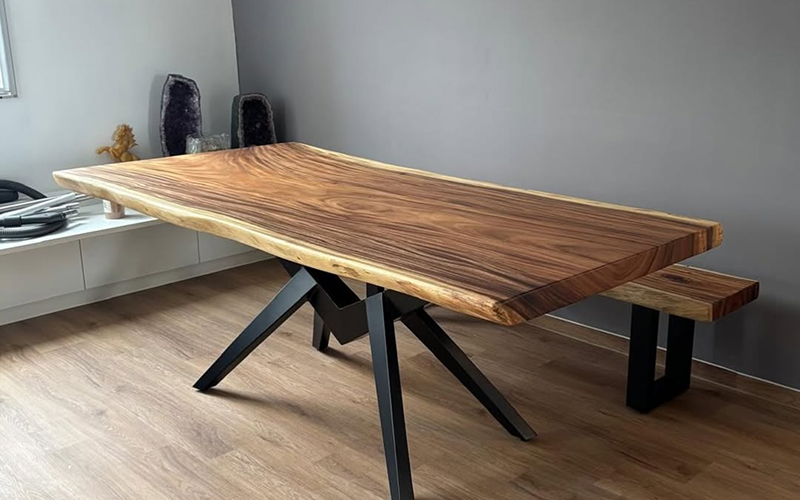
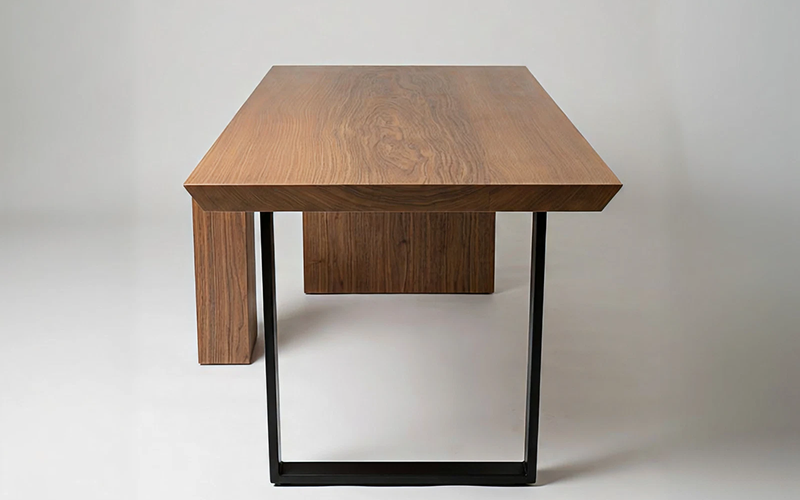
A single slab wood table, for example, allows the natural grain to flow uninterrupted across the surface, creating a sense of cohesion that is difficult to achieve with jointed panels. The appeal lies not only in its appearance but in how the material is expressed as a whole.
In this context, African Iroko hardwood has emerged as a practical, high-performing choice rather than simply an alternative. Its natural growth characteristics support wider slab cuts, while its structural stability makes it well-suited for large-format pieces. For buyers considering both the visual outcome and long-term performance, it offers a balance that aligns with how teak wood is being selected and used today.
Key Takeaways:
- Teak wood remains valued for durability, but the source now plays a major role in performance and practicality.
- African Iroko offers wider slab potential, allowing for seamless, single-piece furniture without visible joints.
- Plantation-grown options tend to be narrower, often requiring multiple pieces to be joined together.
- Supply restrictions have made some traditional sources less accessible, affecting availability and project feasibility.
- Choosing the right hardwood is not just about appearance, but also about how well it holds up over time in real use.
What Defines Teak Wood as a Material
Teak wood’s natural oils, density, and moisture resistance make it a prized material for furniture and construction. These qualities ensure reliable performance in settings where stability and durability are crucial, especially in large-scale projects.
Over time, the term “teak” has broadened from denoting a single species to encompass other high-performance hardwoods with comparable properties. Consequently, materials like African Iroko are often considered in the same category for practical applications.
Why African Iroko Hardwood Is a Recognised Teak Wood in Furniture Applications
African Iroko hardwood is increasingly regarded not just as an alternative to teak, but as a material that satisfies the practical requirements of contemporary teak wood applications. Its natural density and structural stability ensure reliable performance in larger formats, while its growth characteristics make it ideal for crafting wide, single slabs.
This is particularly advantageous for furniture where scale and continuity are important. For purchasers seeking more than just aesthetic appeal, Iroko offers a thoughtful combination of durability, crack resistance, and consistent grain, making it suitable for pieces designed to last.
Stronger Structure and Crack Resistance
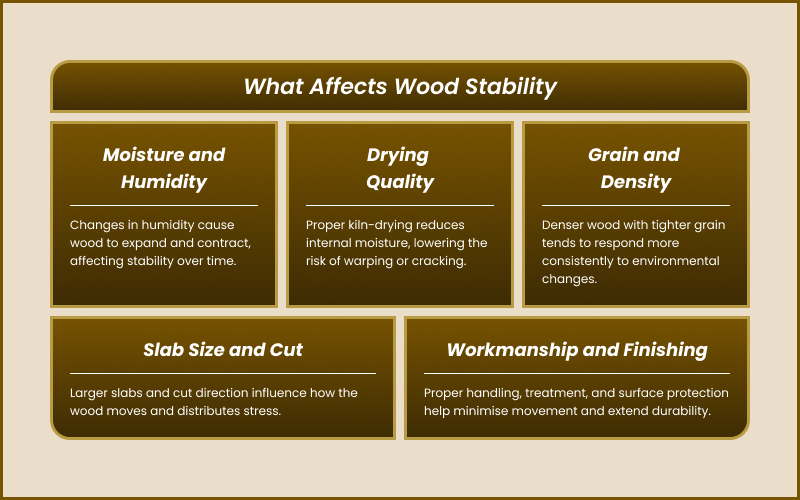
Iroko is a West African hardwood prized for its density and structural integrity, qualities that directly influence the wood’s long-term performance. Compared to many plantation-grown teak varieties, Iroko generally exhibits a more stable fibre composition, allowing it to react more consistently to environmental changes.
This characteristic is particularly important in larger surfaces such as a solid wood dining table slab, where internal stress is more pronounced. Fluctuations in humidity and temperature can cause wood to expand and contract, sometimes resulting in surface movement or splitting. However, when properly kiln-dried and crafted, Iroko functions as a highly crack-resistant hardwood, minimising these risks and preserving the integrity of the piece.
The result is a material that not only looks substantial but also feels dependable with regular use, even as environmental conditions fluctuate.
Naturally Available in Wide, Single Slabs
One of the defining advantages of Iroko lies in the way it grows. Unlike plantation teak, which is often harvested earlier and tends to remain relatively narrow, Iroko trees develop broader trunk diameters over time. This distinction becomes especially relevant when working with teak wood for larger furniture pieces, where slab width directly affects both structure and appearance.
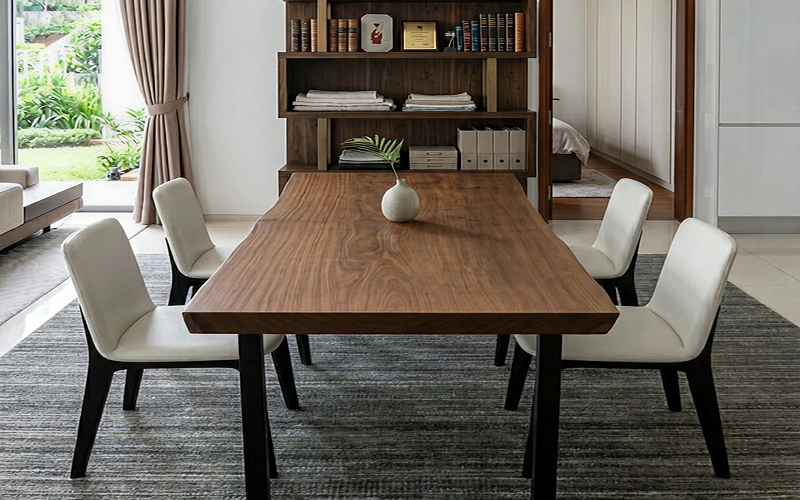
Because of this growth pattern, Iroko allows for genuine single-slab cuts, where a full tabletop can be crafted from one continuous piece of wood rather than assembled sections. The difference becomes clear once the piece is finished. A wood slab formed from a single board carries a natural, uninterrupted grain flow across the entire surface, without seam lines or visual breaks to interrupt the pattern.
For statement pieces such as dining tables or feature counters, this continuity creates a stronger visual presence. It is a quality that jointed panels can achieve functionally, but rarely replicate in terms of overall flow and material expression.
Solid Hardwood Rather Than Joined Panels
Plantation teak, particularly from Indonesia, is often made by joining multiple planks to achieve standard tabletop dimensions. While structurally sound, this method introduces visible seams, resulting in a surface that appears assembled rather than continuous.
Iroko, on the other hand, is more commonly available as full slabs, allowing furniture makers to craft pieces from a single, uninterrupted section of timber. This difference shapes not only the appearance of the piece, but also how it is experienced over time.
A solid wood table made from a single slab possesses a sense of cohesion that jointed panels cannot fully replicate. The grain flows naturally across the surface, without breaks or alignment shifts, preserving the material’s inherent character. For buyers who value this sense of continuity and material integrity, the distinction becomes an important factor in their decision.
This is also why the way a slab is selected and prepared plays a significant role in the final outcome, particularly for pieces intended to be used over many years.
Where Teak Wood Is Commonly Used Today
Teak wood is widely used in applications where both durability and visual consistency are required. While dining tables remain one of the most common uses, it is also frequently selected for kitchen islands, countertops, and built-in surfaces where larger spans of material are needed.
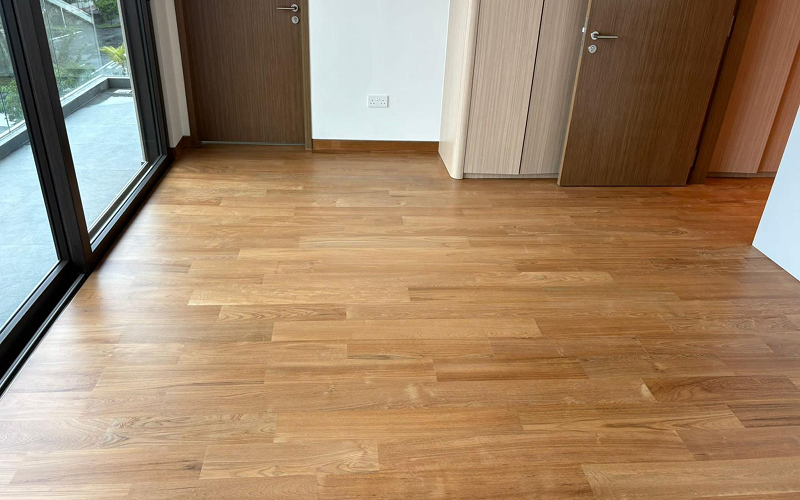
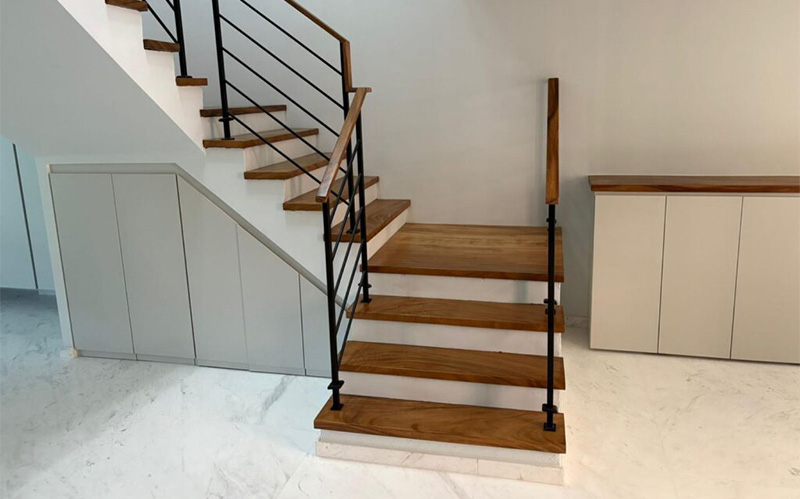
It is also used in structural features such as wooden railings and flooring, where stability over time becomes just as important as appearance. In these applications, the ability to source wider, more consistent slabs plays a direct role in the final outcome.
How Different Sources of Teak Wood Compare
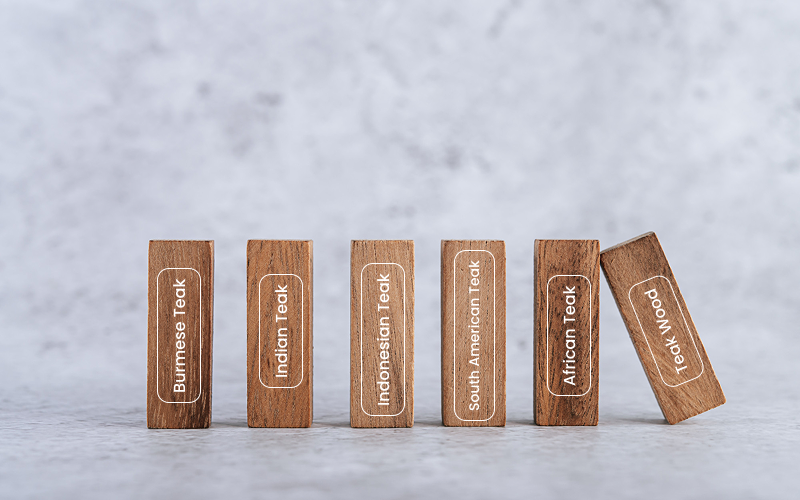
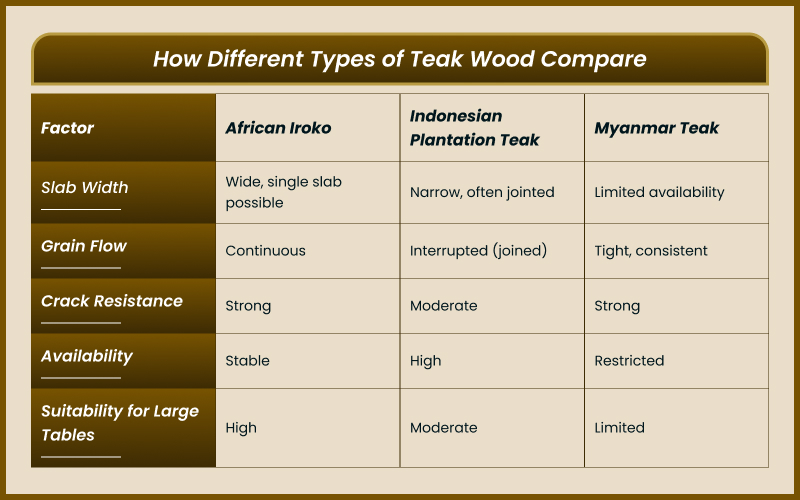
As the market has expanded, the differences between teak wood sources have become more pronounced. Indonesian plantation teak, Myanmar teak, and African Iroko are all subject to different growth conditions, harvesting cycles, and levels of availability, all of which ultimately affect their performance.
These variations are particularly noticeable in slab width, structural stability, and consistency of supply. Therefore, for those considering large-scale projects or long-term applications, understanding the nuances of each type of teak is essential for ensuring that design and performance expectations are realistic.
Iroko vs Indonesian Plantation Teak
Indonesian teak wood is widely available and typically grown in controlled plantations. While this approach supports sustainability and traceability, it also limits the trees’ development. Plantation teak is often harvested after shorter growth cycles, meaning the trees do not reach the same trunk diameter as naturally matured hardwoods, resulting in narrower boards.
To achieve standard tabletop dimensions, these narrower planks are usually joined together, producing functional surfaces. However, visible seams are often part of the finished piece, and the grain pattern becomes segmented rather than continuous. Over time, the joints may also respond differently to wear, humidity, and temperature changes.
Iroko offers a different set of possibilities. Its naturally wider slabs allow for the creation of solid wood dining tables from a single, uninterrupted piece, without the need for jointing. This is particularly relevant for larger formats, such as eight to ten-seater tables or extended conference surfaces, where continuity and stability are more noticeable.
The distinction extends beyond appearance. A single-slab construction reduces the reliance on joins, which can contribute to more consistent structural behaviour in the long term, especially in environments where conditions fluctuate.
Iroko vs Myanmar Teak
Myanmar teak wood has long been considered a premium material, prized for its old-growth origin and tight, mature grain. Its reputation was built over decades of use in marine and architectural applications where durability was paramount.
However, the situation has changed. Export restrictions and regulatory controls have significantly affected the sourcing of Myanmar teak, especially in markets such as Singapore. Consistent and compliant supply has become limited, impacting pricing, lead times, and the availability of larger slabs for practical use.
Consequently, the decision to use Myanmar teak is no longer based on reputation alone. Buyers must now consider whether the material is realistically accessible, legally sourced, and suitable for the scale of their project.
In this context, African Iroko offers a more practical alternative. It provides comparable durability for furniture applications while remaining available in wider slabs, with fewer supply uncertainties. This balance is an important consideration for projects requiring both performance and consistency.
Why Iroko Teak Wood Is the Best Single-Slab Alternative Today
Choosing Iroko often comes down to practicality rather than perception. It offers the strength and durability of teak wood but also allows for the wide, continuous surfaces increasingly popular in contemporary interiors. When properly treated and crafted, it performs well in large formats, reducing the risk of cracking across expansive areas.
Iroko also avoids some of the limitations of other teak sources. Plantation teak often requires jointing due to its narrower growth, while Myanmar teak is subject to supply restrictions, impacting availability and consistency. Iroko offers a middle ground, balancing structural performance, accessibility, and visual continuity.
This balance is especially important in applications like dining tables, kitchen islands, and even wooden staircase railings, where both size and material integrity are critical to the final aesthetic.
In practical terms, the decision often comes down to how much compromise is required. Materials that limit slab width or rely heavily on jointing may meet basic requirements, but can fall short when larger, continuous surfaces are needed. Materials that can be sourced in wider, more stable slabs tend to offer greater flexibility in both design and long-term use.
While Iroko offers strong structural performance, like all natural hardwoods, it still depends on proper drying and craftsmanship to achieve optimal results. The quality of processing plays a significant role in how well the material performs over time.
Questions You Might Have
Is Iroko Teak Wood real teak wood?
Iroko is often referred to as “African teak,” and while it is a real hardwood from Africa, it is not botanically the same as traditional teak (Tectona grandis). Instead, Iroko comes from the Milicia excelsa tree, which is native to West Africa.
That said, Iroko is widely recognised in the industry as a genuine teak wood option due to its similar performance characteristics. It offers excellent durability, natural resistance to moisture, and strong suitability for furniture making, qualities that closely match traditional teak.
In practical terms, the difference lies mainly in its botanical classification and origin, rather than its performance in everyday applications.
Why choose Iroko over Indonesian teak wood?
The distinction often comes down to how the material is grown and used. Indonesian plantation teak is typically harvested earlier, resulting in narrower boards that are commonly joined to form larger surfaces.
By contrast, Iroko is more often available in wider slabs, making it possible to create full tabletops from a single piece. For buyers who prioritise uninterrupted grain and a more cohesive surface, this difference in slab width and construction is an important consideration.
Is Myanmar teak better than Iroko?
Myanmar teak has long been associated with old-growth quality and has built a strong reputation over time. However, current export controls have made it more difficult to source consistently and compliantly.
In practical terms, this affects availability, pricing, and the feasibility of using it for larger projects. Iroko offers a more accessible option while still delivering reliable performance, particularly for applications that require wider slabs and a stable supply.
Does Iroko teak woodrequire heavy maintenance?
While some level of upkeep is usually expected with solid wood furniture, Wood Capitol’s finishing process keeps ongoing maintenance to a minimum.
Each piece is treated with a nano-coating that helps protect the surface against moisture, stains, and everyday wear. This reduces the need for regular oiling or intensive care, allowing the wood to maintain its condition with simple, day-to-day cleaning.
For indoor use, this means the focus shifts from maintenance to regular use, as the material is designed to withstand wear and tear without requiring frequent attention.
Conclusion: A Practical Direction for Teak Wood Today
Teak wood remains a hallmark of durability and lasting value in furniture making, but the origin of the wood is now more important than ever. Growth conditions, slab size, and availability all affect the material’s performance, especially in larger, more demanding applications.
African Iroko hardwood is notable for how well it addresses these practical considerations. It’s ideal for wide wood slab furniture, facilitates true single-slab construction, and provides the strength expected from a crack-resistant hardwood, without the limitations often associated with plantation-grown or restricted sources.
When considering a wooden dining table or exploring alternatives to conventional panel construction, the choice of material has implications beyond mere aesthetics. It influences the piece’s durability, how it ages, and how it integrates into daily life over time.
The difference ultimately comes down to how the slab is selected, prepared, and crafted into its final form. Wood Capitol specialises in sustainably sourced solid timber tables, with a focus on long-term use, reuse, and meticulous craftsmanship. Each slab is carefully selected and crafted in-house, allowing for close control over the drying, treatment, and finishing processes. This ensures that every piece is not only visually cohesive but also structurally reliable for everyday use.
If you’re looking to invest in a single-slab piece that offers a balance of strength, continuity, and longevity, visit the Wood Capitol showroom to view our selection of African Iroko slabs and discuss a custom build tailored to your space and lifestyle.