
Key Takeaways
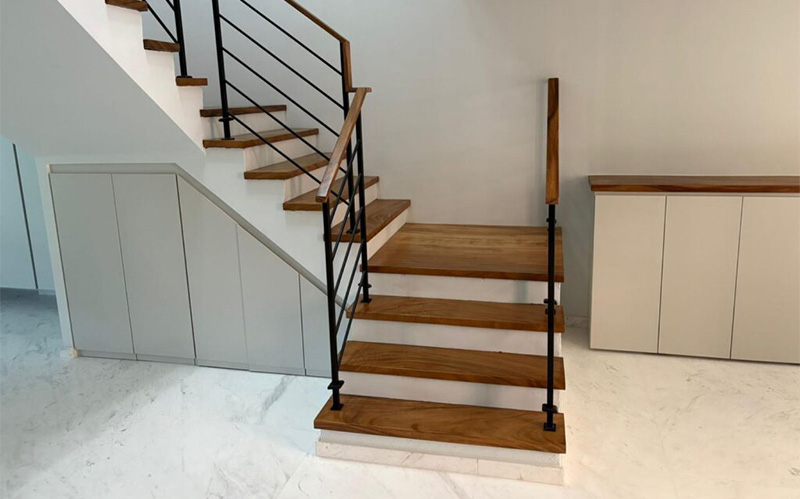
- Solid wood handrails age gradually, allowing wear to blend into the material rather than appearing as surface damage.
- Engineered options offer initial consistency but show wear more abruptly due to their veneer construction.
- Refinishing plays a key role in extending lifespan, with solid timber allowing multiple restorations over time.
- Long-term durability depends on both structure and material behaviour, not just how the handrail looks at installation.
How Handrail MaterialsAge Over Time
Handrails are used every day, yet how they age often goes unnoticed until wear begins to show. The difference is not just in how materials look when new, but in how they respond to years of contact, pressure, and use.
Some handrail materials start to show wear quickly, with marks that feel out of place. Others settle into the space, developing depth and character over time. Understanding these differences helps clarify not only how materials age, but which ones continue to perform well in the long run.
That is where handrail material durability becomes more than a question of finish. It is about how each material holds up, adapts, and remains suitable as the space evolves.
How Different Handrail Materials Compare at a Glance
While the differences become more apparent over time, it helps to look at how handrail materials perform across key areas.
| Aspect | Solid Wood Handrails | Other Materials |
| Ageing | Gradual, blends into the material | Minimal change or surface-level wear |
| Maintenance | Can be refinished multiple times | Limited to cleaning or part replacement |
| Lifespan | Long-term, often lasting decades | Varies depending on material and usage |
| Appearance Over Time | Develops patina and depth | Remains consistent or shows surface fatigue |
| Repairability | High, the surface can be restored | Limited, often requires replacement |
This comparison highlights a key difference in material performance expectations. While some materials are designed to maintain a consistent appearance indefinitely, solid wood can change, adapt, and regenerate over time. This inherent flexibility makes it a more suitable choice for frequently used spaces.
To understand why these differences matter, it helps to look more closely at how materials actually age with use.
Ageing Is More Than Just Surface Wear
It’s easy to think of ageing wood as simply scratches, dents, or fading. In reality, the material changes in quieter, more gradual ways.
With solid timber, these changes occur within the material itself. Fibres compress slightly with repeated contact, natural oils shift, and exposure to air and light causes subtle oxidation. Over time, these shifts combine, softening the surface rather than breaking it down. This defines the ageing of a solid wood handrail, where marks of use settle into the material instead of standing out against it.
Engineered options, however, behave quite differently. Built with a thin veneer over a composite core, they tend to show wear at the surface level. Once that outer layer is compromised, the change is more noticeable. Chips, peeling, or exposed layers can appear, making the ageing process feel more abrupt and less cohesive.
In areas with frequent movement, such as a wooden staircase, these differences tend to appear earlier than expected.
Refinishing Potential Over Time
One of the clearest expressions of this difference appears in how each material can be maintained over time.
Solid timber handrails offer genuine refinishing potential. As scratches deepen or the finish fades, the surface can be sanded back and retreated without compromising the structure. This reveals a fresh layer of the same material, allowing the handrail to continue its lifespan with renewed clarity.
This ability to reset the surface is what keeps solid wood relevant. A well-used wooden handrail for stairs doesn’t need replacing simply because it shows signs of wear; it can be restored, often more than once, while retaining its strength and character.
Engineered handrails don’t offer the same flexibility. The veneer layer is thin by design, so once it’s worn through or damaged, refinishing options are limited. Repairs are often more noticeable, and replacement may become more practical.
Over time, this difference influences not just how a handrail is maintained, but also how long it remains a suitable part of the space.
Patina and Visual Maturity
While ageing describes what happens within the material, patina reflects how those changes appear over time.
Solid wood, over time, develops a natural patina, deepening in tone and acquiring a soft sheen. Areas that experience more contact often become smoother and slightly richer in colour, creating subtle variations across the surface. This isn’t damage; it’s a kind of visual maturity that reflects how the space has been lived in.
Materials like teak wood are especially known for this quality. Its natural oils promote an even ageing process, allowing the surface to evolve while retaining a sense of balance.
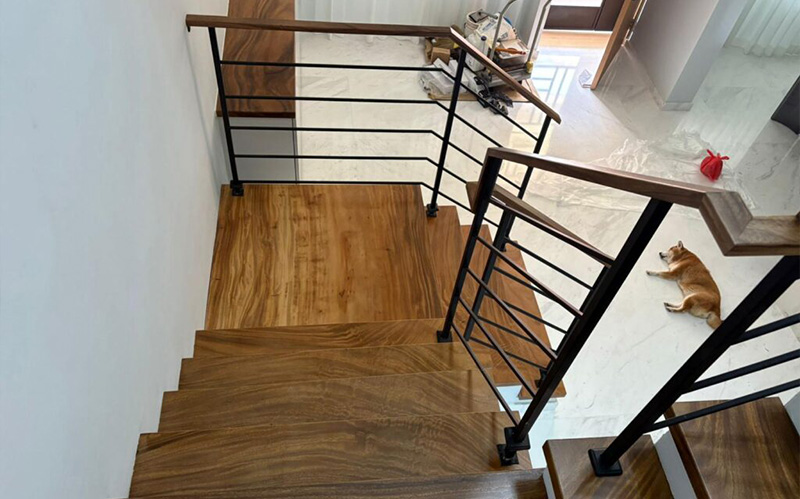
Similarly, suar wood offers a different kind of character. Its bold grain becomes more expressive with time, as light and touch bring out greater depth in the patterns. The result feels less like change and more like the material settling into its surroundings.
Engineered wood, in contrast, is designed to maintain a consistent look from the outset. While this can appear clean initially, it allows little room for gradual change. When wear occurs, it often disrupts that uniformity, making the surface feel uneven rather than naturally aged.
Structural Integrity Across Years of Use
Beyond how a handrail looks over time, durability also depends on how well it holds up under constant use.
Solid wood handrails are typically crafted from a single piece of timber or carefully joined sections of the same material. This gives them a natural strength that permeates the entire structure. The density of the wood helps it absorb impact, resist splitting, and maintain its shape over time.
This consistency becomes particularly important in high-traffic areas, where pressure is applied daily. A solid wood handrail doesn’t depend on a surface layer for its performance; its strength is inherent in the material itself.
Engineered handrails, on the other hand, take a different approach. While they can remain stable under controlled conditions, they rely on layers bonded together with adhesives. Over time, particularly in humid environments or under repeated stress, these layers may begin to weaken or separate. Signs of wear often appear first at the edges and joints.
When assessing the durability of handrail materials, this structural difference plays a subtle but significant role in determining how long the handrail will continue to function reliably and safely.
Choosing Materials With a Long-Term Perspective
It’s tempting to select materials based on their initial appearance. Clean lines, consistent finishes, and immediate visual appeal can be hard to resist.
However, handrails aren’t static features; they’re part of the daily rhythm of a space, used almost unconsciously. Over time, this constant contact shapes not only their appearance but also their durability.
Materials that can be renewed tend to adapt more naturally to this wear and tear. Solid timber, which can be refinished and ages gracefully, supports a longer lifecycle, offering a sense of continuity even as its surface changes with use.
Engineered options can still be suitable in certain situations, particularly where faster installation or tighter budgets are key. In lower-traffic areas or more controlled environments, their inherent stability may suffice.
This is where material choice becomes less about preference and more about how the space is actually used.
When Does Solid Wood Make the Most Sense?
Material choice becomes clearer when viewed through how the space is actually used.
Solid wood handrails tend to suit homes where the staircase is part of daily movement. In these spaces, constant contact is expected, and the ability to refinish and maintain the surface becomes valuable over time. Rather than replacing the handrail when it begins to show wear, the material allows it to be restored and continued.
They also work well in interiors where continuity matters. As the space evolves, whether through light changes, layout updates, or general use, the handrail adapts alongside it rather than standing out as something that needs to be replaced.
In contrast, materials that cannot be renewed may be more suitable for areas with lighter use or where long-term maintenance is less of a consideration.
A Material That Ages With the Space
Choosing materials with ageing in mind shifts the focus slightly. Instead of trying to preserve a fixed look, it becomes about allowing the material to evolve naturally within the space.
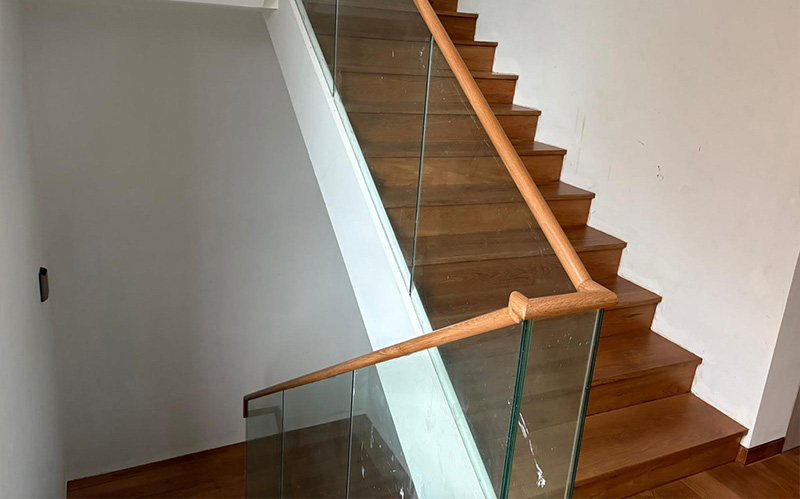
Solid wood handrails do not stay exactly as they are. They soften in tone, develop depth, and take on a patina shaped by everyday use. Rather than resisting time, they respond to it in a way that feels gradual and cohesive.
This reflects a more considered approach to material selection. Timber is not chosen only for how it looks at the start, but for how it behaves over the years of contact, maintenance, and daily life.
In that sense, the value of handrail materials is not defined by their first impression, but by how well they continue.
Wood Capitol focuses on sustainably sourced solid timber furniture, with an emphasis on longevity, material integrity, and how wood evolves with use. Each piece is shaped by a long-term perspective, where the natural qualities of timber are allowed to develop rather than diminish.
If you are planning your home or selecting materials for a staircase, explore Wood Capitol’s collection to find solid wood options that are made to age with your space and support years of everyday living.
Teak Wood: A Guide to Properties, Performance and Long-Term Value
Why Solid Wood Handrails Age Better Than Engineered Alternatives
Wood Flooring Types for Singapore Homes: Hardwoods, Engineered, vs Solid Planks
Can All Wood Tables Be Refinished? What Homeowners Should Know

Suar Wood Singapore - What you should REALLY know (2026)
