Key Takeaways
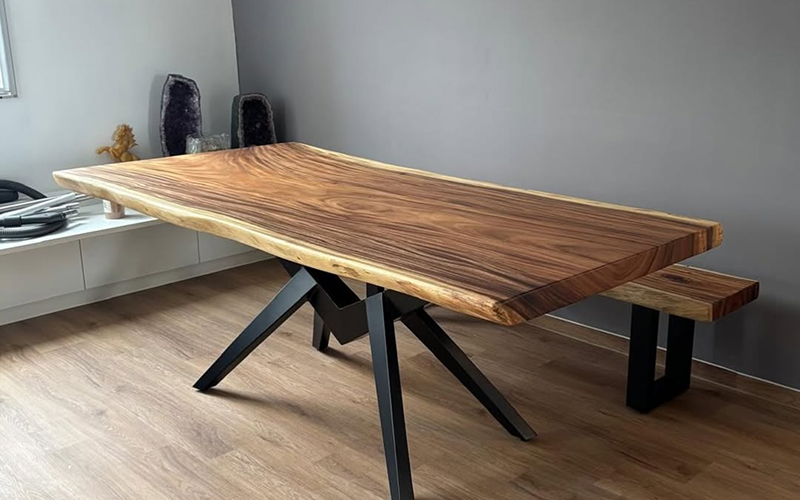
- Not every table can be restored safely. Understanding the construction beneath the surface is the first step before deciding to refinish wooden table surfaces.
- Solid timber allows for sanding and reworking over time, making it far more adaptable to wear, scratches, and changing finishes.
- Veneer surfaces require caution. Their thin top layer limits how much can be refinished without causing irreversible damage.
- Some materials are not meant to be reworked at all. In these cases, maintenance or replacement is often the more practical approach.
What You Need to Know Before You Refinish a Wood Table
Refinishing can seem like a straightforward solution. A few scratches, a lacklustre surface, or perhaps some uneven colouration can make a fresh coat appear to be all that’s needed. However, it’s rarely that simple. Whether you can refinish a wooden table depends more on its construction than its initial appearance.
Look beneath the surface, and the differences start to show. Some tables are designed to be refurbished and renewed over time, while others simply aren’t built to withstand such treatment. Understanding this from the outset can help you avoid expensive errors and inform how you care for the piece in the future.
Can Your Table Actually Be Refinished?
Two tables can sit side by side, appearing almost identical. The grain seems similar, the finish catches the light in the same way, and even the colour feels consistent. However, a closer look reveals that what lies beneath can be completely different.
A solid wood table is built from timber all the way through. The surface isn’t just a layer; it’s an integral part of the structure itself. This allows it to be sanded back, refinished, and renewed without affecting its strength.
Veneer and composite tables, on the other hand, tell a different story. They rely on a thin layer of real wood bonded to a core material. While it may look convincing, that layer has its limits. Once it’s worn through, there’s nothing beneath it that can be restored in the same way.
This difference is critical. It determines whether refinishing your wood table is a practical solution or a step that could do more harm than good.
How to Tell What Your Table Is Made Of
Before you decide to refinish, it helps to take a closer look at how your table is constructed.
- Check the edges: Solid wood shows continuous grain, while veneer often reveals a thin top layer over a different base.
- Look underneath: The underside may expose whether it is solid timber, plywood, or MDF (Medium-Density Fibreboard).
- Observe the grain pattern: Repeating or overly uniform patterns can indicate veneer.
- Consider the weight: Solid wood pieces tend to feel heavier and denser.
These small checks can help you avoid damaging a surface that may not be suitable for refinishing.
What Makes Solid Wood Easier to Restore?
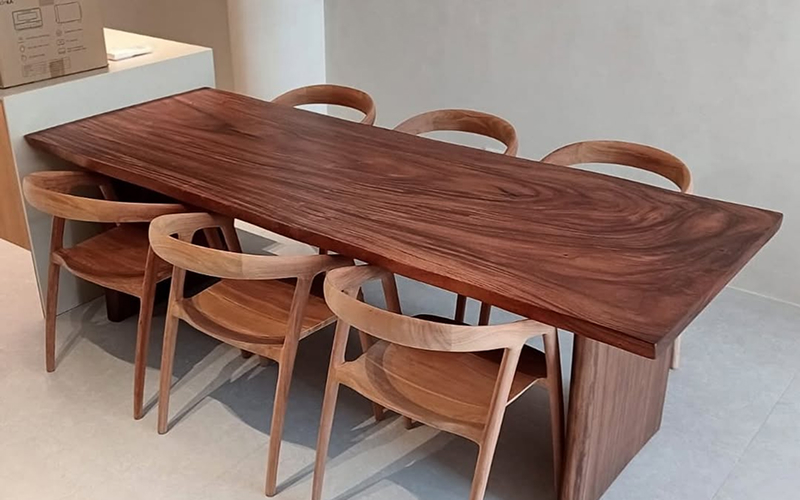
Solid timber possesses a unique resilience that becomes increasingly evident over time. Scratches, dents, watermarks, and even areas faded by sunlight can be addressed rather than avoided, simply because the material has inherent depth.
A worn wood tabletop, for example, can be sanded back to reveal fresh grain beneath. What initially appears to be damage often resides only on the surface. Instead of signalling the end of the piece’s life, these imperfections become part of a cycle in which the table can be renewed and enjoyed anew.
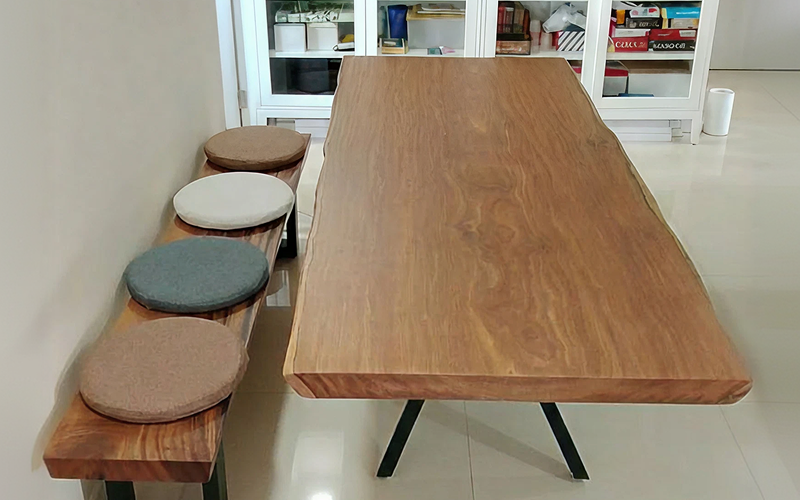
This is why pieces like a Suar wood table tend to remain in homes for years, sometimes decades. The surface may alter with time, finishes may be updated, and edges may soften slightly, yet the structure remains sound. It adapts rather than deteriorates.
This embodies the essence of solid wood table top restoration. It extends beyond mere aesthetics, allowing a piece to evolve alongside changing spaces, tastes, and daily use without compromising its fundamental integrity.
What Happens During the Refinishing Process?
If your table is suitable, refinishing usually follows a sequence of careful steps, each affecting how the final surface looks and holds up over time.
- The surface is sanded to remove the existing finish and smooth out scratches, stains, or uneven areas.
- Dust and residue are thoroughly cleared to ensure the new coating adheres properly.
- A stain may be applied to adjust or deepen the colour, depending on the desired look.
- A protective finish is added to seal the surface, enhancing durability and resistance to daily wear.
At first glance, the process can seem fairly straightforward. In practice, though, it requires a steady hand and a clear understanding of the material. The amount of sanding a surface can tolerate, how evenly it absorbs stain, and how well it holds a finish all depend on the table’s construction.
When Refinishing a Veneer Table Becomes Risky
Veneer has its own appeal, offering a uniform grain, smoother finishes, and often a more accessible price point. At first glance, it can be just as convincing as solid timber. However, beneath that surface lie its limitations, especially when it comes to refinishing.
With veneer furniture refinishing, the margin for error is small because the surface layer is so thin, sometimes just a fraction of a millimetre. Even slight over-sanding can expose the core beneath, which is usually plywood, MDF, or another composite. Once exposed, there’s no easy way to rectify the damage.
At this point, the surface loses its natural grain and depth, leaving it looking uneven or patchy. Restoring it becomes far more difficult than initially anticipated.
This doesn’t mean veneer tables can’t be cared for. Regular cleaning, light touch-ups, and protective finishes will still help maintain their appearance. It simply means that refinishing requires a steadier hand and a clear understanding of the material’s limitations.
Which Table Materials Should Not Be Refinished?
Some tables simply aren’t made to be refinished. Laminate, foil, and other synthetic surfaces are designed to maintain their appearance, not to be stripped back and reworked.
Once you begin sanding or removing the finish, the underlying layers start to show. These cores, often made from particleboard or MDF, lack the structural integrity and aesthetic appeal required for restoration. What seemed like a minor refresh can quickly lead to irreparable damage.
In these cases, attempting to refinish your wood table typically creates more problems than it solves. A protective overlay, resurfacing solution, or even replacing the table altogether is often the more sensible option.
Is Refinishing Worth It, or Is Replacement a Better Option?
Refinishing is generally a worthwhile option for solid wood tables, especially when the surface shows signs of wear from everyday use. With the right approach, scratches, stains, and fading can be addressed while preserving the strength and character of the timber
In some cases, limitations come from the condition of the table rather than the refinishing process itself. Issues such as deep structural damage or severe warping may require more extensive work beyond surface restoration. Refinishing also calls for the right tools, patience, and a controlled environment to achieve a consistent finish.
When the table is well-constructed and structurally sound, refinishing remains one of the most effective ways to extend its lifespan and maintain its appearance over time.
Is Refinishing Worth It in the Long Run?
Refinishing a wood table is more than just a practical decision; it reflects your long-term vision for the piece: how you expect it to age, adapt, and remain a part of your home.
A well-made, wooden table offers remarkable flexibility. It can be repaired, refinished, reshaped, and adapted to changing needs. Minor marks and wear don’t detract from its value; often, they add character that develops naturally with use.
This is closely linked to long-term table top care. Selecting materials that can be renewed reduces the need for replacements and encourages a more considered approach to living with your furniture.
While not every table is designed to last for decades, understanding the construction of those that are transforms your approach to them. Refinishing becomes less about correcting imperfections and more about preserving something that continues to evolve.
How to Care for Your Table After Refinishing
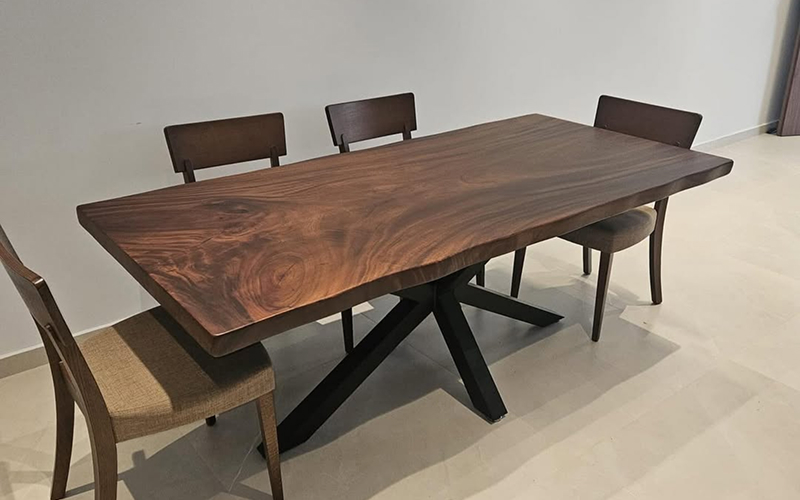
Once refinished, proper care helps maintain the surface for longer.
- Wipe the surface regularly with a clean, damp microfibre or synthetic cloth to keep it clean and hygienic
- Never leave spills overnight, as this can lead to stains that are difficult to remove
- Use coasters only for hot cast-iron items, as these can cause burn marks on the surface
- Avoid using alcohol wipes, hand sanitiser, bleach, or commercial cleaning agents, as they can damage the nano-coating finish
- Dust the surface regularly using a soft cloth, with mild soap and water if needed
- Avoid dragging items or applying rough force on the surface to reduce scratches over time
- Place the table in a covered area, where possible, to reduce prolonged exposure to sun and rain
- Refinish the surface when there are deeper scratches, stains, or visible wear, using proper professional methods
These small habits support long-term furniture care and reduce how often refinishing is needed.
Refinishing is only part of the bigger picture. Choosing a table made from solid timber gives you more room to maintain, repurpose, and live with the piece over time. Wood Capitol focuses on sustainably sourced solid wood furniture designed for long-term use, with a strong emphasis on reuse and repurposing rather than disposability.
For existing pieces, Wood Capitol also offers services to repair dining table surfaces, helping extend the life of solid wood furniture while preserving its original character.
Visit our showroom to explore available wood slabs in person and find a piece built for long-term use, adaptability, and lasting value.